Fencing in Buckinghamshire for Farms, Estates and Yards: When Repairs or Replacement Make Sense
If you are searching for fencing Buckinghamshire services, the issue is usually not just how a boundary looks. A loose run of fencing, leaning posts or a tired site edge can start to affect access, control and day-to-day use of a farm, estate or yard. The key question is not always whether something is damaged. It is whether repair is still practical or whether replacement is now the better long-term step.
At JC Contracting, we provide fencing, hedge cutting, site clearance and grounds maintenance from Bledlow, HP27 9QQ, across Buckinghamshire and surrounding areas. For working land and active yards, our approach is simple: assess the condition of the boundary, understand how the space is used and recommend the option that makes the most practical sense.
Why damaged fencing quickly becomes a working problem
Fencing is easy to leave on the list when the damage seems minor. A post is leaning, a section has been patched before, or the line still just about does the job. The trouble is that boundary issues tend to spread.
Access points become awkward when lines move, gateways narrow or edges are overgrown.
Boundaries become harder to manage when multiple sections are weak rather than just one isolated area.
Site presentation slips if visitors, tenants, staff or clients are arriving at a yard or estate with visibly neglected edges.
Small repairs become repeated repairs when the same run keeps needing attention.
On farms, estates and commercial yards, fencing is not just about appearance. It helps define usable space, separate working areas and keep a site looking cared for and manageable.
Fencing Buckinghamshire: when repairs are often the right next step
Not every fence that looks tired needs replacing from end to end. In many cases, a targeted repair is the sensible choice, especially when the wider line is still sound.
The damage is localised
If the issue is limited to one short section, one access point or a small number of posts, repair can often restore the boundary without unnecessary extra work. This is common after minor impact damage, local wear or weather exposure affecting a single area.
The fence line is still structurally sound overall
Where most posts remain firm, the line is holding straight and the problem is limited to a few weak points, repair is often the practical option. The aim is to restore function and stability without disturbing sections that are still doing their job properly.
You want to stop deterioration early
Early intervention matters. Replacing a few damaged elements now may prevent a wider failure later, especially on boundaries that are still serviceable overall. This can be a sensible approach when you want to keep the site operational and plan future work in stages.
The layout still works for the way the site is used
If the current boundary position, access arrangement and working width still suit the site, repairing the damaged sections can make more sense than replacing the entire run.
In short, repair tends to make sense when the problem is isolated, the rest of the fence is still worth keeping and the boundary still fits how the land or yard is being used.
When full replacement is usually the more practical option
There comes a point where patching stops being efficient. A fence does not have to be completely down to justify replacement. Often, the real issue is that the boundary has reached the stage where further repairs only delay the inevitable.
Multiple sections are failing at once
If you are dealing with recurring weakness across a longer run, replacing isolated parts may only shift attention from one problem area to the next. When posts, rails or wire are failing in several places, replacement is often the cleaner long-term answer.
The posts have lost their stability
Once a fence line starts moving along its length, stability becomes the main concern. Replacing visible broken sections may not solve the underlying issue if too many posts are loose, rotted or no longer holding properly in the ground.
The fence has already been patched several times
Repeated repair work can eventually cost more in time, disruption and ongoing maintenance than a fresh installation. If the line has become a regular problem, replacement may be the more practical route for reliability and presentation.
The boundary no longer suits the site
Sometimes the issue is not just wear. The yard layout may have changed, access may need improving or the site edge may need redefining after clearance work. When the boundary no longer works for the current use of the land, replacement allows the job to be approached properly rather than repeatedly adjusted.
Vegetation and neglect have compromised the line
Overgrowth can hide the true condition of a fence. Once vegetation is stripped back, it is not unusual to find longer sections in poorer condition than expected. In these cases, combining boundary clearance with replacement work is often the most efficient next step.
What we assess before recommending repair or replacement
At JC Contracting, we do not treat every fencing enquiry the same way. The right answer depends on the condition of the boundary and what the site needs from it.
1. The extent of the damage
We look at whether the problem is isolated or widespread. A short damaged stretch is very different from a full run that has weakened along its length.
2. How the boundary is used
A fence around a busy yard entrance has different demands from a quieter estate edge. The amount of day-to-day use matters when deciding how robust the next step needs to be.
3. Access and ground conditions
Soft ground, awkward corners, banks, heavy vegetation and restricted access can all influence what is practical on site and how best to carry the work out.
4. Whether related maintenance is needed
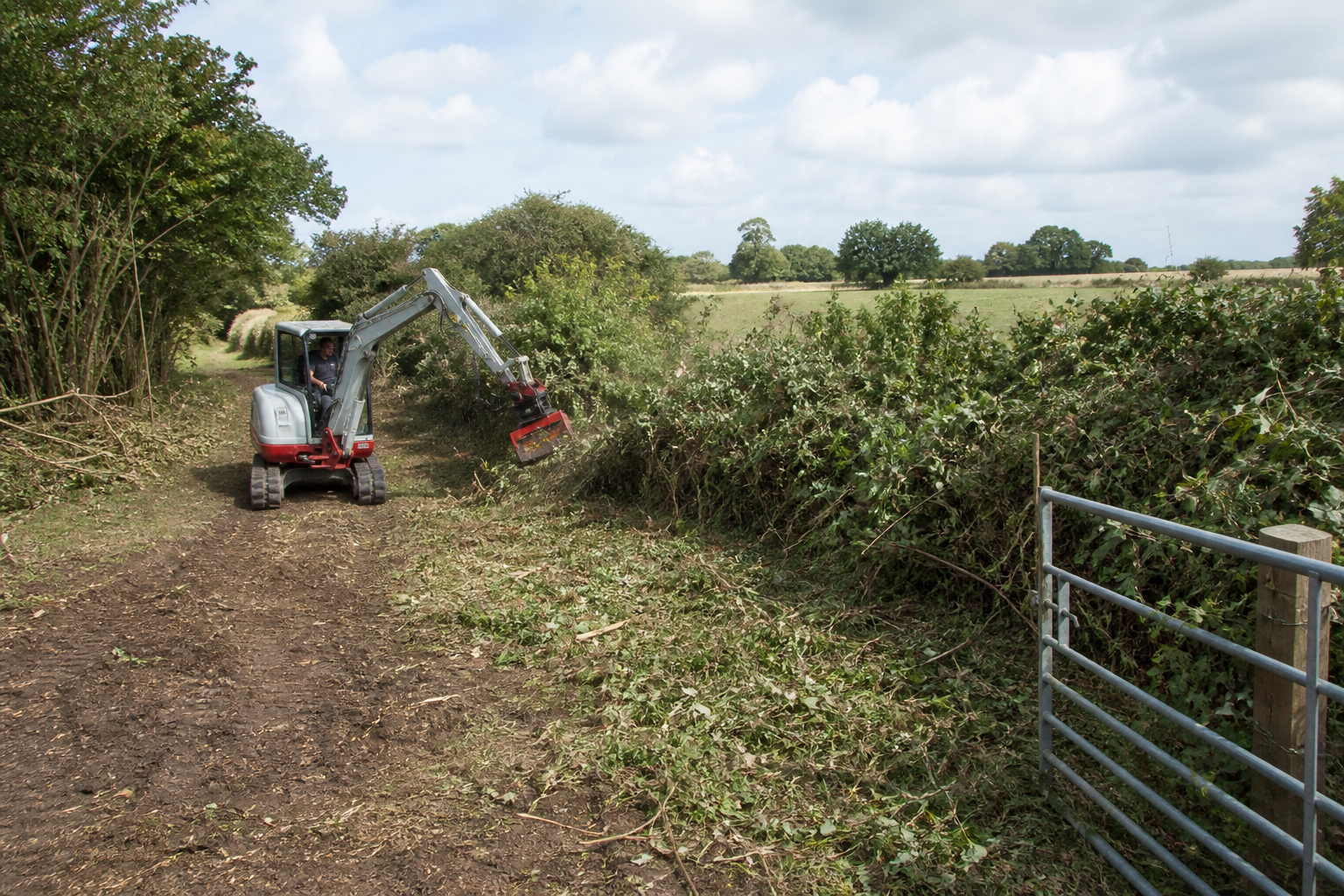
Fencing problems are often tied to wider site conditions. If the line is buried in growth or access around the boundary is poor, it may make sense to combine fencing work with site clearance in Buckinghamshire or hedge cutting and boundary maintenance during the same programme of work.
A joined-up approach for farms, estates and yards
One reason fencing jobs get delayed is that the boundary issue is only part of the problem. The fence may be weak, but there may also be encroaching hedges, poor visibility, overgrown verges or awkward access to the line itself.
Because we provide fencing and grounds maintenance services alongside hedge cutting and site clearance, we can look at the wider condition of the area rather than viewing the fence in isolation. That is often valuable on larger plots, working yards and estate land where boundary condition affects more than appearance.
A practical site visit can help answer questions such as:
Is this a local repair or a longer-run replacement job?
Does the fence line need clearing before work starts?
Are access points and gateways still working as they should?
Would staged work make sense across a larger site?
This kind of joined-up planning helps avoid spending money on short-term patching when the smarter move is a wider reset of the boundary.
Why local customers choose JC Contracting for fencing in Buckinghamshire
We are a local business based in Bledlow, and we work across Buckinghamshire and surrounding areas. Our work is built around practical maintenance, reliable workmanship and a clear view of what will actually help the customer use their site more effectively.
That means no unnecessary complication. If a repair is the sensible option, we will say so. If replacement is the cleaner and more dependable route, we will explain why. The goal is to help landowners and site managers make a sound decision based on condition, use and long-term practicality.
If your fencing issues sit alongside wider site concerns, we can also advise on related grounds maintenance work so the area functions better once the boundary is put right.
FAQ: fencing Buckinghamshire
How do I know if my fence needs repairing or replacing?
If the damage is limited to a short section and the rest of the line is still stable, repair is often enough. If several sections are failing, the posts are no longer firm or the fence has already been patched repeatedly, replacement is usually the better long-term option.
Can overgrown boundaries be cleared before fencing work?
Yes. Where vegetation is restricting access to the fence line or hiding the true condition of the boundary, clearing back the area first is often the most practical way to prepare for repair or replacement work.
Do you carry out fencing work for farms, estates and yards in Buckinghamshire?
Yes. JC Contracting provides fencing from Bledlow across Buckinghamshire and surrounding areas, alongside hedge cutting, site clearance and grounds maintenance for working land and active sites.
Is it worth repairing storm or impact damage?
It can be, particularly if the damage is local and the rest of the fence remains sound. A site assessment is the best way to decide whether repair will be durable enough or whether replacement would be more practical.
Can I combine fencing with other boundary maintenance work?
In many cases, yes. Combining fencing with hedge cutting, clearance or general grounds maintenance can save time, improve access and leave the whole boundary in better condition rather than fixing one issue in isolation.
Book a site visit for fencing repairs or replacement
If you are dealing with a weak boundary, repeated patch repairs or a fence line that no longer suits the way your land is used, the best next step is a site visit. We can assess the condition of the fencing, look at access and surrounding vegetation, and advise whether repair or replacement is likely to be the more practical solution.
To discuss fencing Buckinghamshire work for a farm, estate or yard, book a site visit through our website. We will help you move from temporary fixes to a boundary that works properly for the site again.